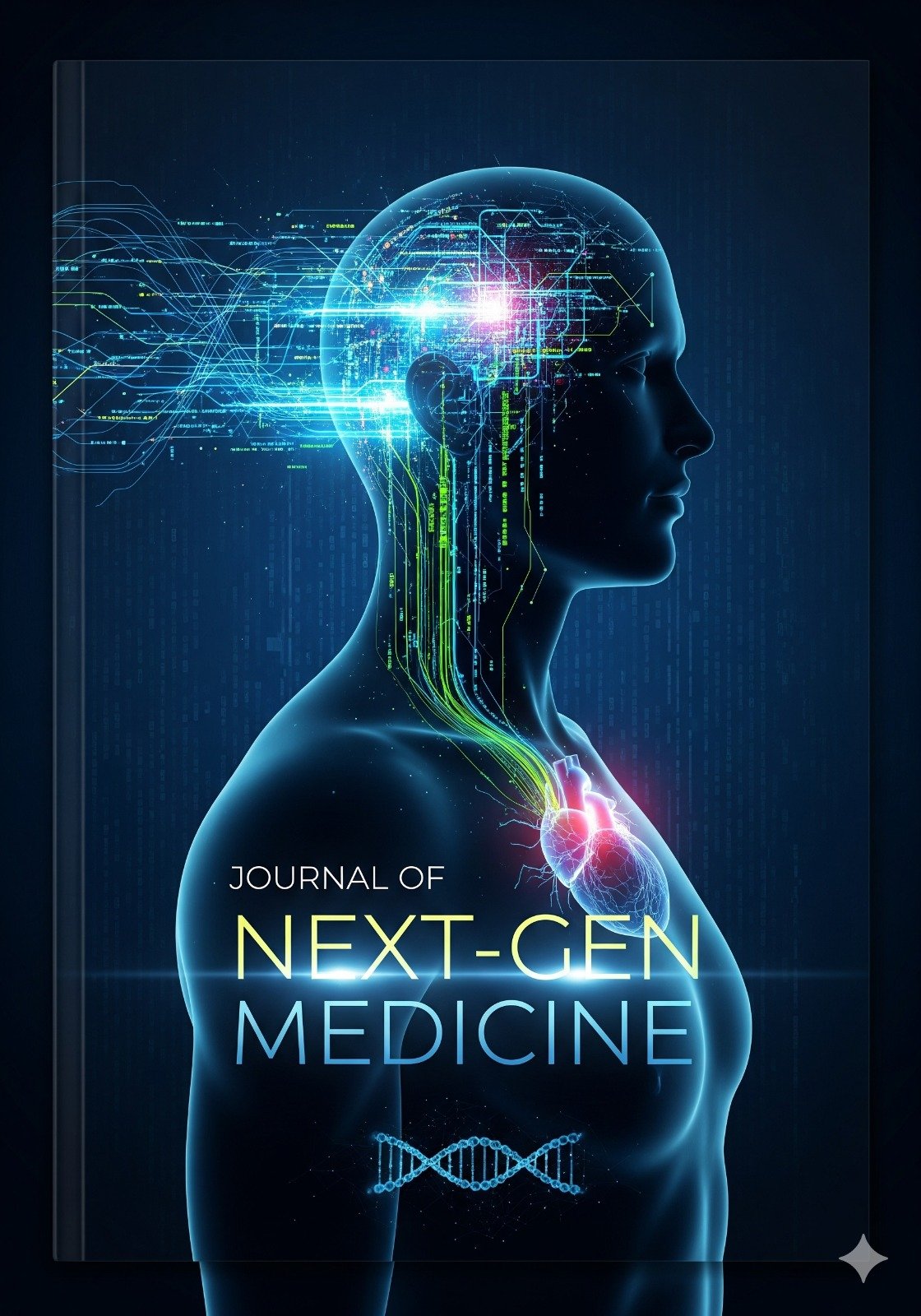
Next-Generation Therapeutics: Innovations in Precision and Regenerative Medicine
Keywords:
The central themes of this paper revolve around precision medicine, regenerative medicine, next-generation therapeutics, and personalized healthcare. Important areas such as stem cell therapy, genomic medicine, CRISPR-based gene editing, tissue engineering, and clinical innovation are emphasized throughout the discussion. The article also connects these fields to translational medicine and patient-centered treatment models, which are critical for advancing the healthcare sector.Abstract
Advancements in medical science have entered a transformative era where next-generation therapeutics, particularly precision medicine and regenerative medicine, are redefining traditional treatment paradigms. Precision medicine leverages genomic, proteomic, and metabolomic data to tailor individualized treatment strategies, while regenerative medicine explores the potential of stem cells, tissue engineering, and gene editing to restore or replace damaged biological structures. This paper critically examines the integration of these two revolutionary approaches, analyzing how they are shaping the future of patient care. Recent studies reveal that personalized treatment protocols not only enhance therapeutic efficacy but also significantly reduce adverse drug reactions, a persistent challenge in conventional medicine. Similarly, regenerative techniques, including induced pluripotent stem cells and CRISPR-based genome editing, are demonstrating remarkable outcomes in restoring organ function, treating neurodegenerative diseases, and accelerating wound healing.
The research underscores the importance of interdisciplinary collaboration among clinicians, biotechnologists, and data scientists in driving these innovations forward. Data collected from global clinical trials, healthcare databases, and real-world evidence is synthesized to evaluate both the effectiveness and the socio-economic implications of next-generation therapies. The findings suggest that while these therapies hold immense promise, challenges related to scalability, cost-effectiveness, ethical considerations, and equitable access remain central to their widespread adoption. A case study on stem-cell–based cardiac repair highlights both the potential benefits and the limitations encountered in clinical applications.
Furthermore, a detailed methodology is presented to explore emerging research designs, incorporating both quantitative and qualitative approaches. A questionnaire-based survey was developed to capture the perceptions of medical professionals, patients, and researchers toward the clinical utility and acceptance of next-generation therapeutics. The results are presented through structured tables, providing insights into awareness levels, adoption barriers, and perceived benefits.
Ultimately, this study concludes that the convergence of precision and regenerative medicine marks a paradigm shift in the healthcare sector. While current limitations prevent universal application, continuous research, improved regulatory frameworks, and technological advancements are expected to accelerate global adoption. By bridging innovation with ethical responsibility, next-generation therapeutics have the potential to transform modern medicine into a more personalized, curative, and sustainable healthcare model.